
CCC CCCC CCCC
LLLLLLLL
XXXXXX XXXXXXXX XXXXXXXX XXX XXXXXXX XXXXXXXX XXXXXXXXXX XXXX XXXX XXXXX XXX XXXXXXXX X XXXX XX XXXXX XXXXXXXXXXXX
Deployed across four continents in oil, gas, water and minerals.
The RSS-NMR stack has been used on live exploration programmes in Ukraine, the United States, Indonesia, Kazakhstan, the UAE and Mauritania — with hydrocarbon and water targets independently confirmed by drilling.
Case references available under NDA on request
Service specifications
Spectral signatures resolved from surface down to seven kilometres — the operational envelope of most hydrocarbon and deep aquifer targets.
Independently reported accuracy for hydrocarbon and water targets, with measurement error under five percent across historical case work.
From aerospace imagery ingestion to delivered subsurface report, most regional surveys complete inside one month.
Core methodology protected under patents № 35122 and № 86168 covering the RSS-NMR acquisition and interpretation stack.
Aerospace imagery and a defined survey area — oil, gas, water, or specific mineral targets.
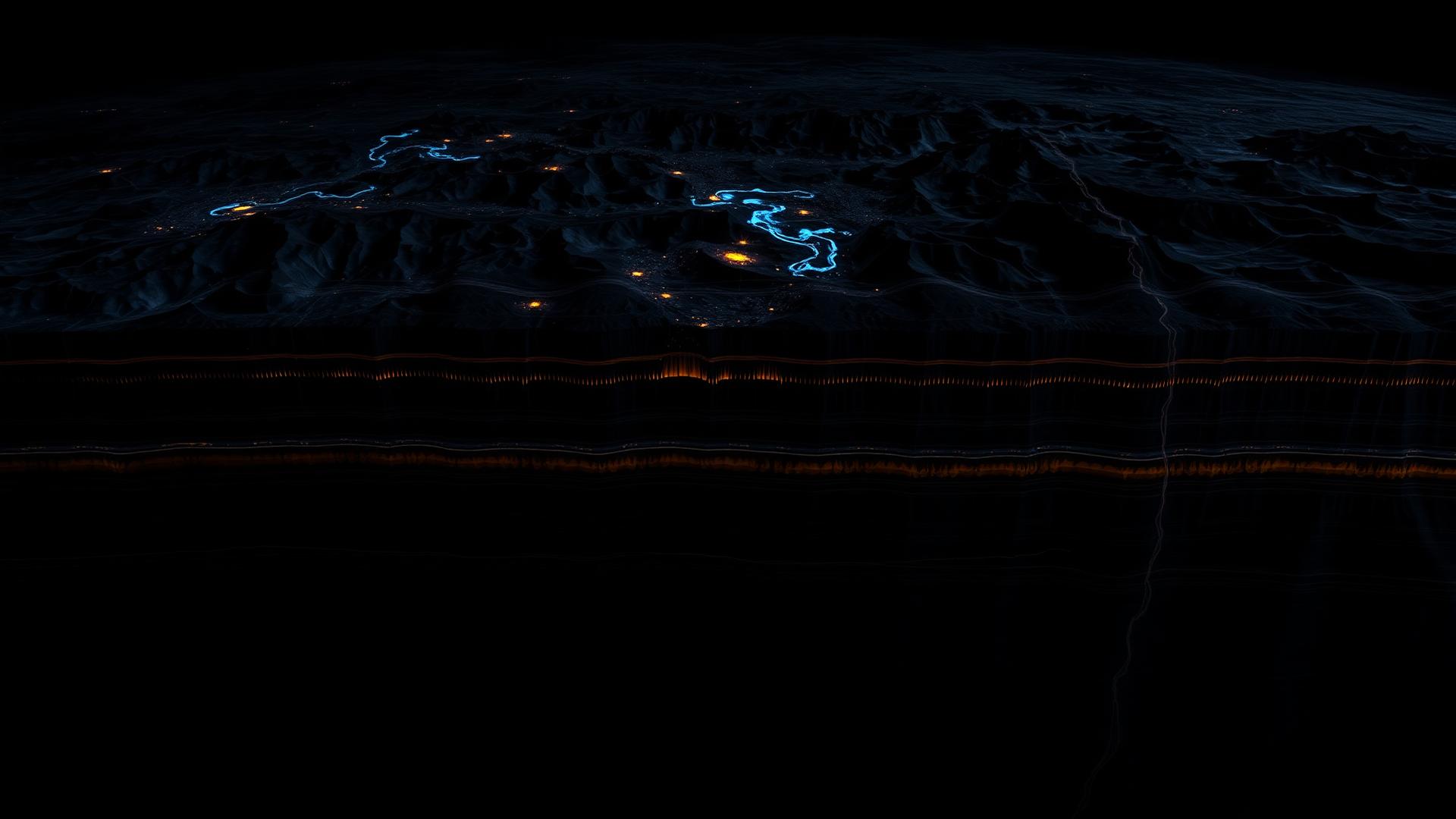
RSS maps deposit contours from space; NMR wafers cross-validate signatures on the ground.
Every deposit is tied to a spectral fingerprint and cross-checked against calibration wafers.
Distinct spectral signatures separate hydrocarbons, aquifers and metallic deposits from background.
Reports are formatted for exploration committees and go directly into drilling programme planning.
Historical case work in Ukraine, USA, Indonesia, Kazakhstan, UAE and Mauritania.
Request A Survey
Include region · target substance · depth range